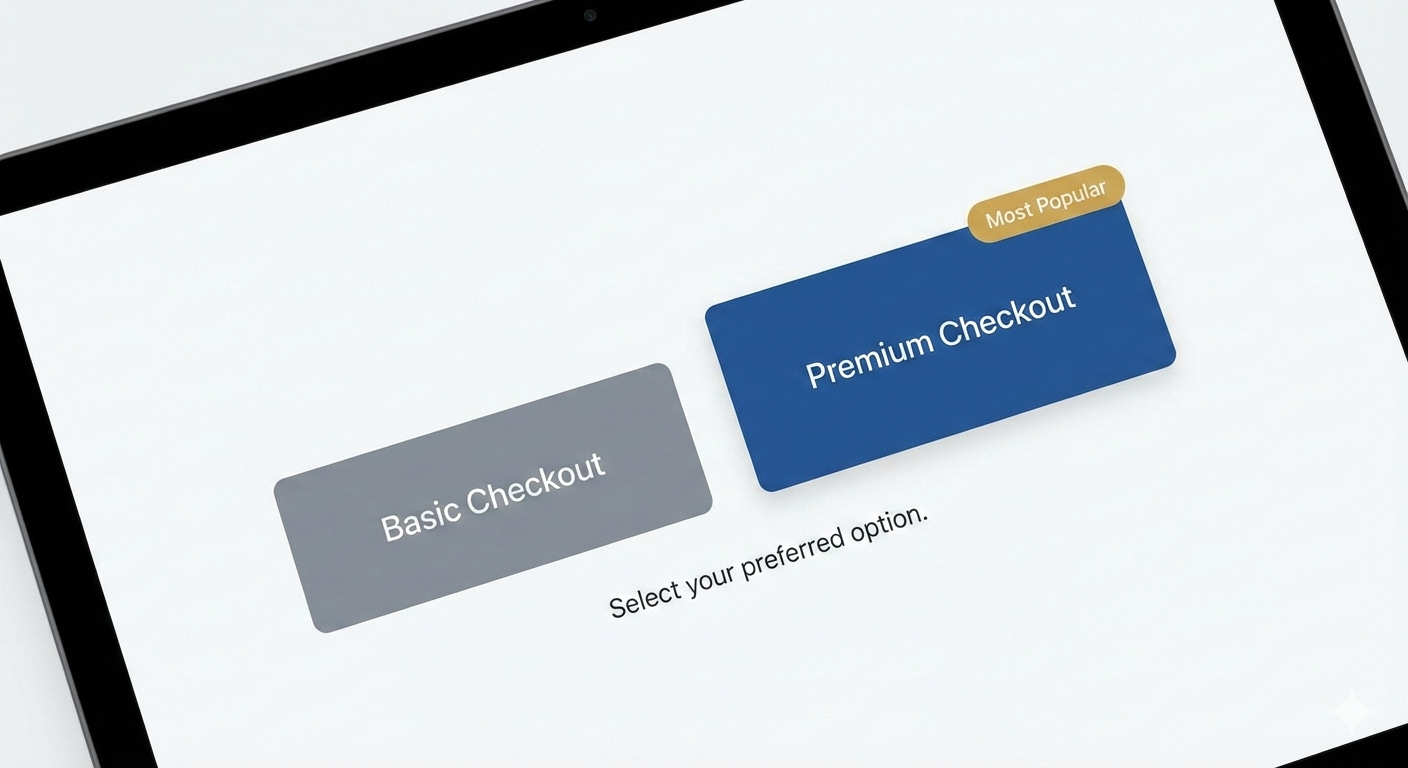
Why Adding A Cheaper Option To Your Sales Page Gets More People To Choose The Expensive One
And the four steps to testing this change

Giving customers two ways to buy your product will outsell giving them one — even when one of those options is cheaper.
We proved it at the Lefkoe Institute. We added a second, slightly cheaper version of an existing product. And instead of customers flocking to the cheaper option, nearly everyone picked the more expensive one.
Sales went up 20%. Revenue went up 30%.
Because we changed the decision people were making using the Yes-Yes pricing model.
What is the Yes-Yes pricing model?
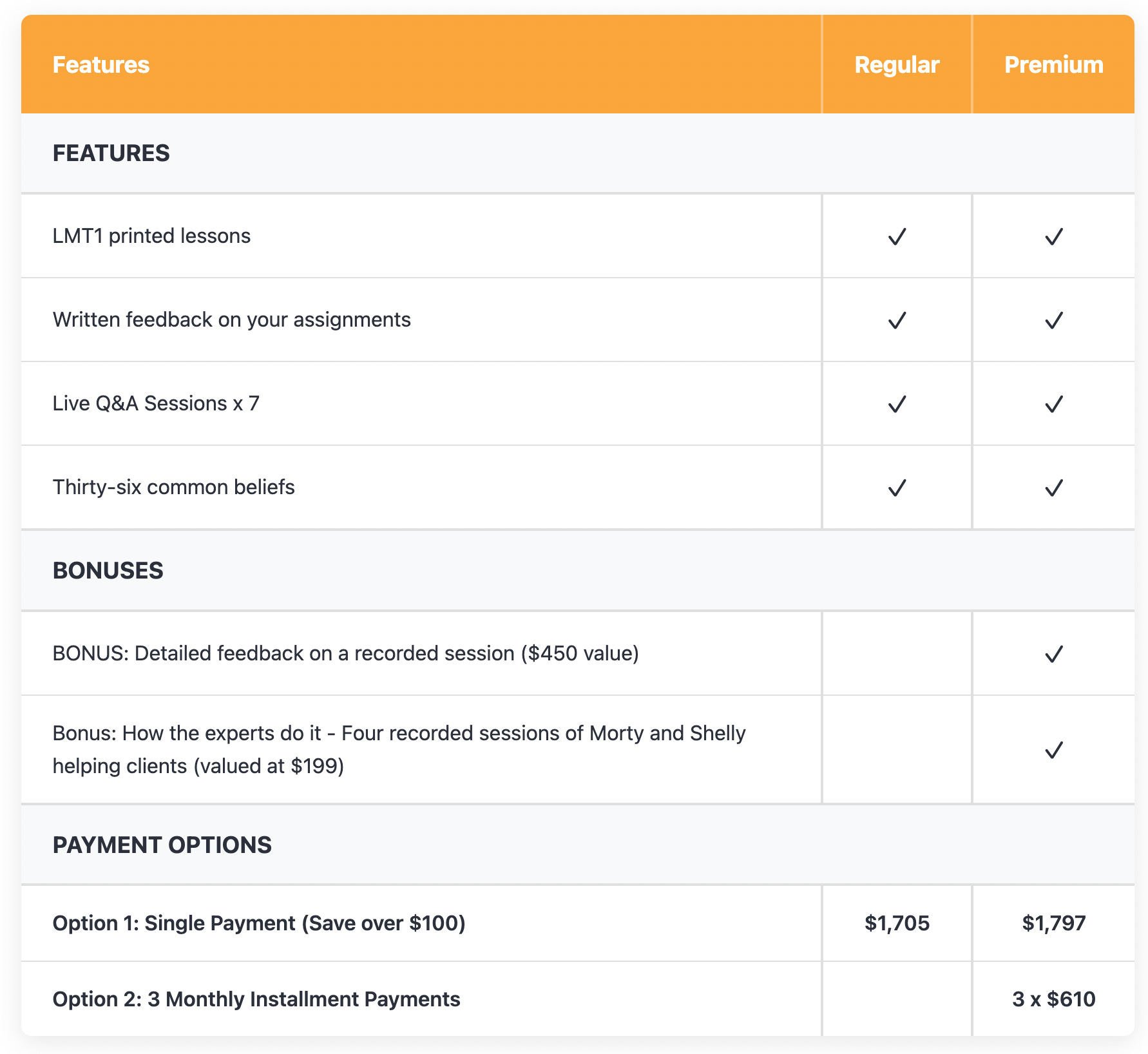
The Yes-Yes pricing model — a term from marketing expert Sean D’Souza — is simple. Instead of presenting your product as a single take-it-or-leave-it offer, you present two versions of it side by side: a regular version and a premium version.
The premium version includes a few valuable bonuses. The regular version is the core product on its own.
The prices are close. We’re not talking about a $97 option and a $497 option. We’re talking about something like $49 versus $45. Or $99 versus $97.
But here’s what that tiny difference does psychologically. It changes the question in your customer’s mind from:
“Should I buy this?”
To:
“Which version should I get?”
Why does such a small price gap actually work?
Because the goal isn’t to maximize the price of the premium. The goal is to make the premium feel like an obvious choice.
When the price difference is too large — say 40% — people start treating them as two separate products. They second-guess themselves. They wonder if the cheaper version is “good enough.” And some of them just don’t buy at all.
But when the difference is small, the reasoning becomes almost automatic: “Why would I not spend a few extra dollars to get these bonuses?”
Even if they’re not 100% sure they’ll use the bonuses, they don’t want to regret passing them up for just a couple of dollars. So they choose the premium.
I’ve tested this across multiple products. Every time, almost no one chooses the regular version.
And that’s exactly the point.
What makes this ethical?
I want to address something directly, because I know this is the first thing that comes to mind for a lot of people.
Isn’t this manipulation?
Here’s my honest answer: only if you’re not delivering real value.
The regular version has to be genuinely purchasable. Both options need to be real. The bonuses in the premium can’t be cheap filler — they need to be valuable enough that you could sell them separately.
Here’s the thing. Not every product is right for every person. The reason the Yes-Yes model doesn’t convert 100% of visitors is that some people genuinely aren’t the right fit. But there are people who need what you’re offering and just need a small nudge to say yes. By giving them two clear choices instead of a yes/no decision, you’re helping those people take action on something that’s actually good for them.
A lot of people suffer from indecision. They land on your page, they want what you’re offering, and then they stall. The Yes-Yes model removes that stall.
Manipulation is when you mislead people. This isn’t that. This is making the path to yes a little smoother for the people who already need what you have.
How to set up the Yes-Yes pricing model
Here’s how I’d set it up for a digital product:
Step 1: Start with your premium price. This is the price you actually want to sell at.
Step 2: Create your premium version. Add 1–3 valuable bonuses to the core product. Sometimes one great bonus is all it takes. These should be things you’d be proud to sell on their own.
Step 3: Set your regular price close to the premium. A 10–15% difference works well for lower-priced products. As prices go higher, close the gap further. For example, at the Lefkoe Institute we sell a course where the premium is $1,695. The regular version is $1,660. That’s a gap of just $35 — small enough that the premium feels like the obvious choice every time.
Step 4: Display them side by side. A simple comparison grid works. Let customers see both options at the same time so the choice is clear.
That’s it.
One thing to keep in mind about bonuses
A bonus that belongs in the premium version is NOT the same as extra content that belongs in the core course.
When I built the Atomic Course Blueprint, I had more material than I needed for the main product. Storytelling principles were something I really wanted to teach. But were they essential to the minimum result the course promised? No. So storytelling became the bonus.
The core course covers what you need to outline, write, and structure a great course — in just 33 focused pages, with a 23-day step-by-step plan to finish your course and expert feedback on your outline. The storytelling bonus goes deeper for those who want it.
This is the right way to think about it. Your main product should be the minimum lovable product — everything someone needs to get the result. Your bonuses are the “I wish I could also teach you this” material. Now you can. And it does something useful for your pricing too.
What to do if it doesn’t work right away
Here’s something I love about this model. There’s very little risk.
If you run it and a lot of people are choosing the regular version over the premium, you haven’t failed. You’ve just learned something. Close the price gap a bit more and run it again. As long as people are buying, you can keep adjusting.
The only situation where you learn nothing is if nobody buys. But that’s a different problem — and it’s one the Yes-Yes model can’t solve on its own.
Summary
The Yes-Yes pricing model is one of the simplest shifts you can make to your sales page. You’re changing the decision your customer is making — from yes or no to yes or yes. Same product, same price, different question.
Present a regular version and a premium version. Keep the prices close. Make the bonuses genuinely valuable. And let your customers talk themselves into the better option.
The Atomic Course Blueprint — Want to create a course without the usual overwhelm? The Atomic Course Blueprint gives you a simple, repeatable system to outline, write, and structure a powerful course in weeks, not months. No blank-page paralysis. No endless revisions. Just 33 focused pages, a 23-day plan, and expert feedback on your outline. Find out more here.
Still here? You rock!
One thing you can do for me is reply to this email and share: have you tried anything like this with your own pricing? I’d love to hear what happened.